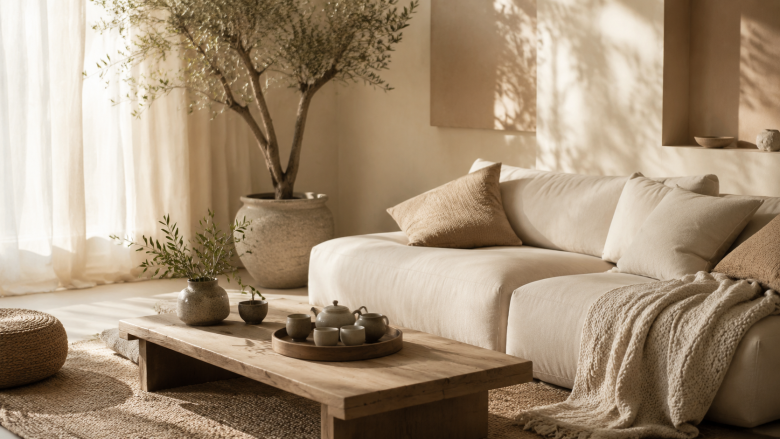
What a Restful Home Actually Requires
A restful home is not about a perfect Pinterest board or a one-time weekend declutter. It is about managing the sensory inputs that hit your nervous system from the moment you walk in the door. Light, sound, and the low-level digital hum of devices all shape whether your body can actually downshift. If you address only the visual clutter and add a few candles, you are missing the forces that keep you wired.
In my experience helping friends and clients reshape their spaces, the difference between a room that looks calm and a room that feels calm comes down to one thing: dynamic control. You need to be able to change the light, the sound, and the digital presence throughout the day. This article walks you through what I call the Sensory Reset - a practical framework for managing these forces, plus a weekly maintenance routine that keeps your home restful long after the initial effort.
The Sensory Reset Framework
The Sensory Reset is built on three core inputs: light, sound, and digital intrusion. Most design advice stops at static elements like paint color and furniture placement. But your home is not a photograph. It is a sequence of experiences that change from morning to night. The framework treats your environment as something you actively adjust, not something you set up once.
Here is the core idea: your body has natural rhythms, and your home should support them. Bright, cool light in the morning helps you wake. Warm, dim light in the evening signals your brain to wind down. Similarly, your ears need periods of genuine quiet, not just background music. And your devices need boundaries, because a phone that pings all evening keeps your mind in a state of low-grade alert.
When I first tried to make my own apartment restful, I made the mistake of focusing only on what I could see. I bought soft throws, rearranged furniture, and added plants. It looked great. But I still felt restless. The problem was the buzzing LED strip under my kitchen cabinets and the hum of my Wi-Fi router on the nightstand. Nobody tells you about the router. That is the kind of detail this guide is built around.
Light: Circadian Lighting for Real Life
Circadian lighting is the practice of adjusting the brightness and color temperature of your lights to match the natural progression of the day. The goal is simple: bright, cool-toned light (around 5000-6500 Kelvin) during the day, and warm, dim light (around 2700-3000 Kelvin) in the evening. This matters because your eyes and brain have evolved to use light as a biological cue.
Our bodies are deeply attuned to light exposure. According to research on light and human health, the National Institute of Environmental Health Sciences highlights that light influences everything from sleep to metabolism. The practical takeaway is not that you need expensive smart bulbs. It is that you need a plan for how your light changes over the day.
How to Set Up Zones of Light
Instead of one overhead light that blasts the whole room, create zones. A floor lamp in the corner for reading, a small lamp on a side table for ambiance, and a dimmer switch on the overhead for when you need task lighting. This gives you flexibility. You can go from bright and functional to soft and wind-down without changing rooms.
I recommend starting with the bedroom. This is where your sleep happens, so it deserves the most attention. Swap out any cool-toned bulbs for warm ones at 2700K. If you use a phone or tablet in bed, turn on the night shift mode that filters blue light. The difference is subtle but real. Your eyes stop straining, and your brain gets a clearer signal that the day is ending.
For the living room, the key is separating evening light from daytime light. During the day, open the curtains and let natural light in. As the sun sets, switch to lamps. If you have smart bulbs, set a schedule that automatically drops the color temperature after 7 p.m. If you have regular bulbs, just get into the habit of turning off the overhead and switching to lamps.
What Most People Get Wrong About Lighting
Most people think brightness is the only issue. But color temperature is just as important. Two bulbs can be equally dim, yet one will feel relaxing and the other will feel harsh. The difference is the Kelvin rating. Warm light has a yellow-orange hue. Cool light has a blue-white hue. Blue light in the evening is linked to disrupted sleep because it suppresses melatonin production.
The thing nobody tells you about is the light from your television. A bright TV screen in a dark room creates a harsh contrast that fatigues your eyes. If you watch TV in the evening, keep a dim lamp on in the background. This softens the contrast and makes the experience less tiring. It is a small change, but it has a noticeable effect on how tense you feel after a movie night.
Sound: Acoustic Management and the Value of Quiet
Sound is the most overlooked element of a restful home. We are so used to constant noise - the refrigerator hum, the traffic outside, the notifications from our phones - that we stop noticing it. But our nervous system does not stop noticing. Chronic background noise keeps us in a state of low-level alert, which is the opposite of rest.
Acoustic management is not about soundproofing your home. That is expensive and rarely practical. It is about reducing the noises you can control, masking the ones you cannot, and creating periods of intentional quiet.
Identify the Noise Sources
Spend one evening just listening. Sit in your main living space and catalog every sound you hear. The refrigerator compressor, the hum from your computer fan, the distant road noise, the neighbor's TV. You do not need to fix all of them. But you need to know what you are dealing with.
In my own home, the biggest offender was the bathroom fan. It had a loud motor that stayed on for twenty minutes after I turned it off. I lived with it for months before I realized I could simply replace the fan motor. It cost forty dollars and took twenty minutes to install. The silence was immediate. Most people do not realize that small mechanical noises like this are often easier to fix than they expect.
Practical Ways to Manage Sound
For external noise like traffic or neighbors, a white noise machine is the most effective tool. A fan can also work. The key is to place it between you and the noise source. The masking effect works best when the white noise is closer to you than the offending sound.
For internal noise like the hum of appliances, your options are repair, replacement, or relocation. A humming refrigerator might just need cleaning behind it. A loud computer fan might need a simple cleaning. If you cannot fix it, try to create physical distance. Move the device to a different room or put it behind a closed door.
Soft furnishings also play a role. Rugs, curtains, and upholstered furniture absorb sound and reduce echo. A room with hard floors and bare walls feels acoustically alive, which means every sound bounces around. Adding a thick rug and heavy curtains can dramatically soften the space. This is not just about aesthetics. It is about reducing the amount of acoustic energy in the room.
Creating Periods of Intentional Quiet
The most powerful acoustic practice is simply scheduling quiet time. Set aside twenty minutes each evening when you turn off the TV, the music, and the podcasts. Just sit in the silence. This is uncomfortable at first because we are not used to it. But it gives your brain a chance to process the day without constant input.
This pairs well with a gentle evening wind-down routine. As we covered in our gentle evening wind-down plan, the transition from busy to restful does not happen instantly. It needs a buffer of low-stimulation activity. Sitting in a quiet room for a few minutes is the perfect buffer.
Digital Intrusion: Setting Boundaries with Your Devices
Digital intrusion is the hidden killer of restful homes. Even when your phone is silent, its presence on the nightstand is a visual cue that work and social obligations are always within reach. The low hum of a laptop in sleep mode or the glow of a router LED adds to the sensory load.
Most advice about digital boundaries focuses on screen time limits. That is useful, but it misses the environmental aspect. Your home should have physical zones where devices are not allowed. This is not about being extreme. It is about creating a clear separation between the digital world and the physical rest space.
The Phone Charging Station Technique
Pick a spot outside the bedroom, preferably in the kitchen or a hallway, and make it the only place where phones are charged overnight. This is a simple rule, but it has a big impact. When your phone is out of the bedroom, you remove the temptation to check it in the middle of the night. You also remove the visual distraction of its screen lighting up with notifications.
I did this myself about a year ago. The first week was strange. I kept reaching for my phone in bed out of habit. But after that, I noticed my mind was quieter. The last thing I saw before sleep was not a screen. It was a book or the ceiling. The first thing I saw in the morning was not a screen either. That shifted my whole day.
Turning Off the Digital Hum
Beyond the phone, there are other devices that contribute to the digital hum. The router in the bedroom. The smart speaker on the nightstand. The laptop that is always in sleep mode on the desk. Each one has a small LED light and a tiny electromagnetic presence. Together, they create a background thrum that keeps your nervous system engaged.
You do not need to go offline entirely. But you can move the router to a central location away from sleeping areas. You can turn off the LEDs on your devices or cover them with tape. You can shut down your laptop at night instead of leaving it in sleep mode. These are small actions, but they compound.
One thing to consider is the impact of constant digital availability. If your home is set up so that work is always accessible, your brain will struggle to disconnect. Creating physical distance from work devices is a form of environmental boundary setting. It tells your brain that this room is for rest, not for productivity.
Ergonomic Furniture: Physical Rest Beyond Soft Textures
Most articles about relaxing homes focus on soft textures - plush rugs, velvet pillows, chunky knit throws. These are nice, but they do not address the physical strain of sitting in a chair that does not support your body. Physical rest is not just about softness. It is about support.
Ergonomic furniture is designed to support your body's natural alignment. This matters because a chair that is too low, too hard, or too deep can create tension in your back and neck. That tension accumulates over an evening of sitting and leaves you feeling more tired, not less.
The Chair Test
Here is a simple test. Sit in your main lounge chair or sofa. Your feet should be flat on the floor, your knees at about a 90-degree angle, and your lower back supported. If you have to slump or strain to feel comfortable, the chair is not working for you.
I once had a beautiful armchair that I loved. It was deep and soft, perfect for curling up with a book. But after twenty minutes, my back would ache. I realized the seat was too deep for my legs, which meant I could not sit with my back against the backrest. The fix was not a new chair. It was a firm lumbar pillow that filled the gap between my lower back and the chair. That small addition changed everything.
The takeaway is that you do not need to replace all your furniture. You need to assess what you have and add support where it is missing. A footstool can improve posture. A firm throw pillow can support your lower back. A simple adjustment can make a huge difference.
The Bedroom as a Sanctuary for Sleep
Your bed is the most important piece of furniture in your home. If it is not supporting your body correctly, no amount of soft bedding will fix it. The mattress should be firm enough to support your spine but soft enough to relieve pressure points. Pillows should support your neck without elevating your head too much.
When I talk to people about their sleep, the mattress is often the culprit. They have had it for ten or fifteen years, and they have just gotten used to the sagging. But a worn-out mattress can contribute to back pain and poor sleep. According to guidance from the Centers for Disease Control and Prevention, sleep health is a critical component of overall well-being. Your mattress is the foundation of that.
If you cannot afford a new mattress, a mattress topper can extend the life of an old one. A two-inch memory foam topper can add cushioning and support. It is not a permanent fix, but it is a practical one.
Building a Weekly Restoration Routine
A restful home is not a one-time project. It is a system that needs maintenance. Without a routine, the clutter creeps back, the lights stay on default, and the devices find their way into the bedroom. The key is to build a weekly restoration checklist that takes less than thirty minutes.
Here is the checklist I use. It is simple, but it keeps the Sensory Reset framework alive.
- Sunday evening: Walk through each room and reset the lighting. Put lamps back in their zones. Replace any burnt-out bulbs. Check that the dimmers are set to the correct levels.
- Monday morning: Clear the nightstands. Remove any cups, books, or devices that have accumulated. Wipe the surfaces clean.
- Wednesday: Do a five-minute sound check. Sit in your main living space and listen. Note any new hums or buzzes. If something is making noise, add it to a list to fix.
- Friday: Do a digital reset. Move any devices that have migrated back into the bedroom. Charge your phone outside the room. Shut down your laptop for the night.
This routine is not about deep cleaning. It is about maintaining the sensory environment. The goal is to catch small issues before they become habits. If you let a phone charger stay on the nightstand for a week, it becomes part of the scenery. The weekly reset prevents that.
What to Do When You Are Too Tired
There will be weeks when you do not feel like doing the routine. That is normal. The trick is to make the routine so small that it is hard to skip. The five-minute sound check is just sitting and listening. The digital reset is just moving a phone. If you are truly exhausted, do only one item on the list. The point is to keep the system alive, not to be perfect.
I have had weeks where I skipped the entire routine. The home did not fall apart. But I noticed the subtle shift. The nightstand had a glass of water and a phone. The living room had a pile of mail. The lights were on their default bright setting. The restful feeling faded. The weekly reset brings it back.
Combining the Sensory Reset with Physical Activity
Your environment works together with your body. A restful home supports restful sleep, but it also supports the kind of physical activity that helps you sleep better. Gentle movement during the day, like a simple stretching routine, can make your evening rest deeper.
If you want to build this connection, consider starting your day with movement. A short yoga flow in the morning can set a calm tone for the whole day. As we discussed in our guide on beginner weekly yoga flow at home, the key is consistency, not intensity. A calm body makes a calm home feel even more restful.
The connection works the other way too. A cluttered, noisy home makes it harder to want to move. You do not feel like stretching in a room that feels chaotic. The Sensory Reset clears the physical space, which makes it easier to engage in the physical practices that support rest.
Common Misconceptions About Restful Homes
There are several myths about creating a restful home that I want to address directly. These misconceptions can lead people to spend money and effort on things that do not actually matter.
Myth 1: You Need to Declutter Everything
Minimalism is popular, but it is not the only path to rest. A home with personality and meaningful objects can be deeply restful. The issue is not the number of objects. It is the level of visual noise. A few well-chosen items on a shelf can be calming. A hundred items crammed together is not.
The key is to edit, not to eliminate. Keep the things that have meaning. Remove the things that are just taking up space. This is a more sustainable approach than trying to achieve a bare aesthetic that does not reflect who you are.
Myth 2: You Need Expensive Smart Home Technology
Smart bulbs and automated shades are nice, but they are not required. You can achieve circadian lighting with a twenty-dollar dimmer switch and a few warm-toned bulbs. You can manage sound with a fan or a white noise machine. The principles matter more than the gadgets.
The risk with smart home technology is that it adds complexity. You have to manage apps, deal with connectivity issues, and troubleshoot problems. For some people, this creates more stress, not less. Start with the simple, manual version. Add technology only if it genuinely improves your life.
Myth 3: A Restful Home Means No Activity
A restful home is not a museum. It is a place where you can be active and then recover. You can have a home gym in the corner and a meditation cushion by the window. The goal is to create spaces that support different states of being, not to enforce a single quiet mode.
This is why the Sensory Reset is about control and flexibility. You want to be able to turn the lights up for a workout and down for dinner. You want to be able to make noise and then restore silence. The environment should be adaptable, not static.
Sustaining the Calm: The Long-Term View
The biggest challenge with a restful home is not the initial setup. It is the maintenance. Life happens. You get busy, you travel, you have guests. The systems you put in place will get disrupted. The key is to have a plan for recovery.
My plan is the weekly restoration checklist. It is the backbone of my entire approach. When I feel my home drifting back toward chaos, I run the checklist. It takes half an hour, and it brings the space back to a state of rest.
The other part of the long-term view is accepting that your needs will change. What felt restful in your twenties might not feel restful in your forties. Your body changes, your schedule changes, your stressors change. Revisit your home environment every few months and ask yourself: is this still working for me?
This is not a one-time process. It is a continuous practice. But it is a practice that pays off. A restful home is not a luxury. It is a foundation for better sleep, better mood, and better health. And it is something you can build, one small change at a time.
The most restful home is not the one that looks the most beautiful. It is the one that manages light, sound, and digital presence so well that your body can finally let go. That is the goal. Everything else is just decoration.