The fluorescent hum of the office greeted me that Monday morning, coffee in hand, as I eased into my chair for another day of emails and meetings. By noon, the familiar tug in my lower back had settled in, a quiet reminder of hours spent hunched over the keyboard. I paused, wondering if a simple shift—like standing for part of it—might ease that steady ache without upending my routine. It wasn't about drastic change, just a curious nudge toward feeling more present through the afternoon.
That moment lingered, pulling me toward small experiments in my workday.
The Morning Ache That Pushed Me to Stand
I remember rubbing my shoulders mid-morning, the stiffness creeping up from a solid two hours of sitting. It wasn't sharp pain, just a dull restlessness that made focusing feel heavier. Evenings at home, I'd notice how my body unwound faster after walks, hinting that posture might play a part in that tired drag.
One day, I stacked books under my monitor to test a standing setup. The shift brought a subtle steadiness to my breathing, like the calm after stretching in bed. It sparked a quiet curiosity—could alternating like this carry over to office days without fanfare?
Over weeks, that initial stand revealed how sitting locked in tension I hadn't named. Energy flowed differently when I moved between postures, less like slogging through mud. This wasn't about perfection, just noticing what felt grounded amid the desk clutter.
That ache became my gentle teacher, pointing toward sustainable tweaks rather than overnight fixes.
What Helped Me / What Might Help You
I found pairing standing time with my tea break smoothed the transition—no staring at a screen awkwardly. Sipping slowly while scanning emails let my legs settle into it naturally. It turned a work moment into something restorative, like a brief pause in a busy stream.
Adjusting my feet made a world of difference; one forward, one back, eased the wobble. It felt like dancing lightly, keeping blood moving without strain. You might notice restless legs quiet down with this simple stance shift during calls.
Breathing deeper while standing cleared the midday fog for me. Inhale for four, hold, exhale—tied to checking my inbox. It brought a calm focus, especially when thoughts scattered.
Hydration cues helped too; I'd stand to refill my water, linking movement to a basic need. This wove standing into my rhythm seamlessly. Small anchors like these built steadiness over time, without forcing big leaps.
Your Four Gentle Steps to Alternate Postures All Day
These steps grew from my office trials, easing me into alternating without overwhelm. Start small, layering one at a time for a sustainable flow.
- Step 1: Open with 20 minutes standing. Right after your morning coffee, raise your screen or stack books for height. Use this for quick email scans or calendar checks—my first replies felt clearer, legs waking gently.
- Tip: Keep knees soft, not locked.
- Tip: Glance at the window for a breath every few minutes.
- Step 2: Mid-morning sit reset, 30 minutes. Lower down for deeper tasks like drafting reports. I chose this for when focus sharpened best seated. It prevented early fatigue, balancing the stand.
- Tip: Scoot back fully, feet flat.
- Tip: Set a soft timer chime.
- Step 3: Afternoon stand wave, 25 minutes. Rise again post-lunch for calls or brainstorming. Standing while prepping healthy snacks for weekday energy kept my mind light during these. Energy stayed steady through the 2 p.m. dip.
- Tip: Shift weight side to side.
- Tip: Sip water to stay anchored.
- Step 4: End with seated wind-down, 20 minutes. Sit for wrap-up notes or team chats, easing into evening. This mirrored my weekly sleep schedule routine for better mornings, signaling closure. Reflect briefly on what felt calm.
- Tip: Roll shoulders gently.
- Tip: Note one steady moment.
Repeat this cycle loosely, adjusting as your day unfolds. It built a rhythm that felt like my own, not rigid rules.
Finding Steady Rhythm Amid Emails and Calls
Standing pulled me into focused email replies, the screen at eye level cutting glare. My thoughts flowed without the chair's subtle slump. Sitting switched in for lively team calls, where gesturing felt natural.
When restlessness stirred in my legs during longer stands, a quick foot swap settled it. I imagined roots grounding me, steady through virtual meetings. This back-and-forth wove movement into the workflow seamlessly.
By Thursday afternoons, the rhythm hummed—standing for solo deep dives, sitting for collaborative bursts. It mirrored evening wind-downs at home, where posture shifts eased the day's hold. Calm arrived not from force, but from listening to the flow.
Gentle Experiment: One Small Shift for a Week
Try alternating postures every hour with a phone timer for seven days. Begin your day standing for the first task, then sit, noting how energy shifts. No judgment—just jot a word or two, like "restless" or "steady," perhaps using how to set up a simple weekly wellness tracker to spot patterns softly.
By day three, you might feel legs less tired, back more at ease. It invites curiosity over pressure. What does one posture switch feel like tomorrow? Jot it down after your second stand, and carry that whisper forward.
Listening When Your Body Whispers 'Enough'
Tired feet or a tight neck signal it's time to switch. I pause at these cues, lowering slowly for a seated breath. Evening stretches then unwind what built up.
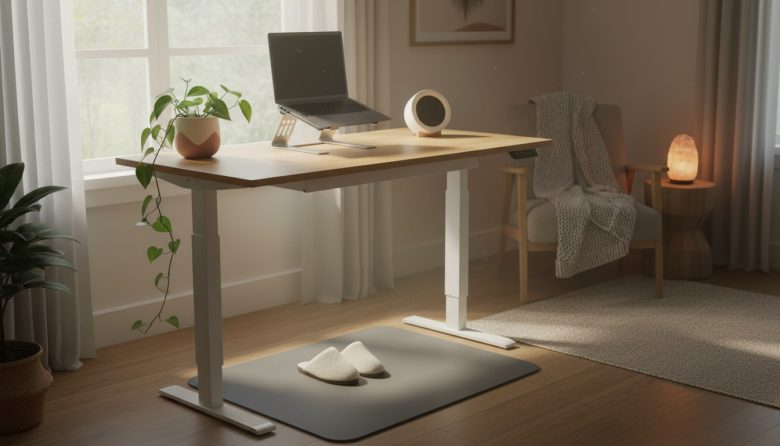
Sustainable tweaks, like anti-fatigue mats if needed, honor these whispers. It keeps the practice kind, fostering calm over endurance.
FAQ
Do I need fancy equipment to start?
No, simple stacks of books or a box under your monitor work fine for height. I began with what was on hand, adjusting as needed. Over time, a basic riser might feel nice, but it's not essential for feeling the benefits.
How do I handle meetings while standing?
Stand for shorter ones, sitting for longer discussions to stay engaged. Mute to shift postures quietly if shared space. It keeps you present without drawing attention.
What if my legs feel restless at first?
That's common; try the foot-forward stance or gentle shifts. Breathing deeply helps settle it too. It eases after a few days as your body adjusts.
Can this work in a shared office?
Yes, discreet riser boxes fit most desks without fuss. Time switches around others' rhythms. Small and low-key keeps it collaborative.
How long until it feels steady?
A week or two of gentle practice often brings rhythm. Listen to your cues, tweaking as you go. Steadiness builds patiently, like any quiet habit.