Some weekdays start with that familiar drag, where the alarm pulls me from a restless sleep and the hours ahead feel like climbing a gentle hill. I remember one Monday, coffee in hand, staring out the window at the soft morning light, wondering how to weave in small threads of steadiness without upending my routine. Over time, tiny shifts—like a quieter wake-up or a pause mid-afternoon—helped me move through the day feeling less scattered, more like myself.
Crafting a Wake-Up That Feels Kind, Not Jarring
I used to jolt awake to a blaring buzzer, heart racing before my feet even hit the floor. Switching to a sunrise-simulating lamp changed that; it eases you into the day with a gradual glow, mimicking dawn. Pair it with opening the curtains right away—natural light signals your body it's time to stir gently.
Then comes a one-minute stretch: stand tall, reach arms overhead, and bend side to side. It loosens the overnight tightness without demanding much. I noticed my mornings felt less hurried, more like a soft invitation to the day.
Keep the phone across the room at first, too. Scrolling news feeds can spike restlessness before you've even started. This simple barrier lets your mind settle, setting a calm rhythm from the outset.
Fueling with Foods That Linger Gently
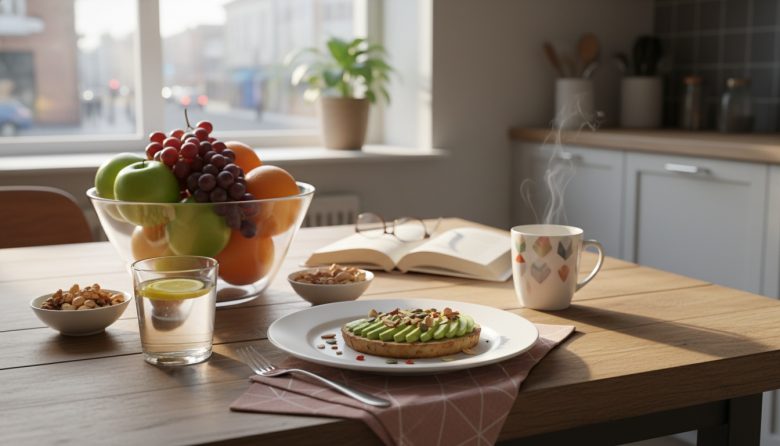
Breakfast isn't about loading up for a sprint; it's about choices that provide steady fullness through the morning. Oats topped with sliced banana and a handful of nuts offer that—complex carbs and a touch of healthy fat keep dips at bay. I found avoiding sugary cereals helped me sidestep the 10 a.m. slump.
Try plain yogurt with berries if you're short on time; the natural sweetness satisfies without a crash. For more ideas, Easy Tips for Stress-Free Weekly Meal Prepping can simplify your mornings. These foods leave you feeling grounded, not wired then weary.
Portion gently—half a bowl often does the trick. Eating mindfully, perhaps at a table away from screens, turns the start of your day into a small ritual of care.
Midmorning Moves to Lift the Fog
Around 10 a.m., that subtle fog can creep in, especially after back-to-back emails. A two-minute walk around the block or down the hall clears it beautifully. Fresh air and steps shake off the stillness, bringing a quiet lift.
Desk-bound? Try seated marches: lift knees alternately while breathing deeply. Or step outside during a call, letting the breeze touch your face. I did this once mid-meeting prep and returned sharper, less adrift.
These aren't workouts, just sparks. They remind your body to stay present, easing the transition into the day's deeper tasks.
To build on this, a short outdoor habit like the one in Weekly Nature Stroll Routine to Refresh Your Mood fits right after. It turns a simple move into a mood refresher.
Weekday Energy Boost Checklist
Tracking small habits makes them stick without overwhelm. Here's a simple checklist for your weekdays—pick a few to start. Jot a checkmark as you go; it builds quiet momentum.
- Drank one glass of water upon waking (hydrates after sleep, eases grogginess).
- Did a one-minute stretch or gentle arm circles (loosens body for the day).
- Ate a steady breakfast like oats or yogurt (avoids early dips).
- Took a midmorning walk or desk march (lifts fog, refreshes focus).
- Sipped water hourly from a fun bottle (keeps alertness soft).
- Paused for three deep breaths at lunch (resets scattered thoughts).
- Gazed out a window post-meeting (quiets afternoon rush).
- Dimmed lights and sipped herbal tea by 8 p.m. (preps restful sleep).
- Noted one win before bed (builds steady outlook).
Use this as a loose guide—adapt to your flow. Over a week, it reveals what lands best.
Sips of Water to Stay Softly Alert
Dehydration sneaks up, turning steady into sluggish by noon. A reusable bottle with time markings turns sipping into habit—aim for half full by midmorning. Infuse with lemon or cucumber for a subtle lift.
I keep mine on my desk, taking a sip with each email batch. It became a rhythm: alert but calm, less prone to that restless edge. No need for apps; the bottle's weight reminds you.
Pair sips with transitions, like after a call. This keeps energy flowing evenly, without the drag of thirst.
Afternoon Pauses That Quiet the Rush
By 2 p.m., the rush builds—deadlines, notifications. A one-minute breath pause counters it: inhale for four, hold four, exhale six. Sit back, eyes closed if possible.
Or gaze out a window at trees or sky; let thoughts drift without chasing. After a team meeting last week, this reset left me steady for the next task. It's a soft brake on the day's momentum.
These pauses aren't escapes; they recharge quietly. You return clearer, less frayed at the edges.
Evening Anchors for Tomorrow's Quiet Spark
As daylight fades, evening choices set tomorrow's tone. Dim the lights around 7 p.m.—it cues your body to unwind. Brew chamomile tea; its warmth soothes without revving you up.
Skip screens an hour before bed; read a page or two instead. I noticed deeper sleep followed, leading to mornings less heavy. These anchors prevent the late drain that steals next day's spark.
Prep loosely: lay out clothes, fill your water bottle. It closes the day with care, opening the next gently.
For meal ties, explore 7 Fresh Recipes for Your Light Weekly Meal Plan to ease evenings further.
What Helped Me, and Might Help You
Consistent small sips led to calmer afternoons—no more foggy slumps. The midmorning walk became my favorite; even five minutes outside shifted everything steadier.
Gentle wake-ups with light and stretch made Mondays feel kinder. Evening dimming ensured rest that carried over. These weren't huge changes, just reliable threads weaving more even energy through weekdays.
Start with what calls to you; small wins compound warmly over time.
Your Gentle Experiment
For the next five days, pick one checklist item—like that morning glass of water. Do it daily, noting how your energy feels by afternoon. What small shift surprised you?
Reflect briefly each evening: steadier, less tired? This tiny trial builds your own rhythm without pressure.
Frequently Asked Questions
Can these tips fit into a packed work schedule?
Yes, they're designed as 1-2 minute habits slotted into natural transitions, like sipping water during coffee breaks or stretching while waiting for your computer to boot. They weave in without carving out extra time. Over days, they feel like part of your flow.
What if mornings always feel heavy?
Begin tiniest: just open the curtains for light first thing, letting it build naturally. Add a stretch once that sticks. Gentleness here prevents overwhelm, easing into steadier starts.
Do I need special foods or gear?
No, everyday items work best—a plain water bottle, your feet for walks, oats from the pantry. Keep it simple with what's on hand. This makes it sustainable for real life.
How soon might I notice a difference?
It varies by person; some feel less restless by day three with steady tries. Others see calmer afternoons after a week. Listen to your own rhythm—it's unique.
What about weekends—keep going?
Optional: try a lighter version, like one walk and evening tea, to carry gentle momentum. Weekends can reset fully, then ease back in Monday. Find what feels nourishing.